Awareness vs. Action Gap in Mental Health
Why viral movements resonate in communities feeling disconnected and overwhelmed.
For anyone on social media, you’ve likely come across the “Let’s Buy Spirit” campaign – a viral initiative aiming to revamp Spirit Airlines as a "people-owned" airline. The initiative, led by Hunter Peterson, received over $132 million in non-binding pledges in the first 48 hours and as of the May 9th audit, $337 million was pledged.
The speed and scale of support shocked people online — but the comments on the videos revealed something even more striking: a growing desire for reconstruction of systems many people feel are failing them.
“This isn’t just about Spirit Airlines...this is deeper. Hear me out – healthcare, education?”
“If we do this and it works out, we could do it with other businesses and make life affordable again.”
“You guys realize if we do this, there’s SO much more we can do. We gotta think big.”
People weren’t just joking about buying airlines or rebuilding healthcare systems. The comments reflected something deeper: a hunger for agency in systems that feel increasingly inaccessible, unaffordable, and impossible to influence as individuals.
Awareness is no longer the problem. People already know mental health matters. They know schools are overwhelmed, healthcare access is unequal, burnout is rampant, and basic needs are becoming harder to afford. But awareness without meaningful action eventually turns into cynicism.
That disconnect is becoming impossible to ignore locally, too.
Over the last few months, numerous Rhode Island school districts have announced staff layoffs due to major budget pressures. The positions impacted include special education staff, multilingual programs, and social workers – departments that were already struggling and understaffed. These cuts will likely decrease accessibility and increase social-emotional and safety concerns for students next school year, while leaving many Rhode Island educators without stable employment opportunities.
On May 22nd, 2026, I attended Rhode Island Civics Day, where students across the state presented projects focusing on issues impacting young people and their communities. Students researched root causes, collaborated with agencies and leaders, and proposed actionable solutions. Topics included teen mental health and suicide, homelessness, substance abuse, violence, food insecurity, healthcare access, transportation, and community belonging.
As a therapist working with children and adolescents, these themes are impossible to ignore.
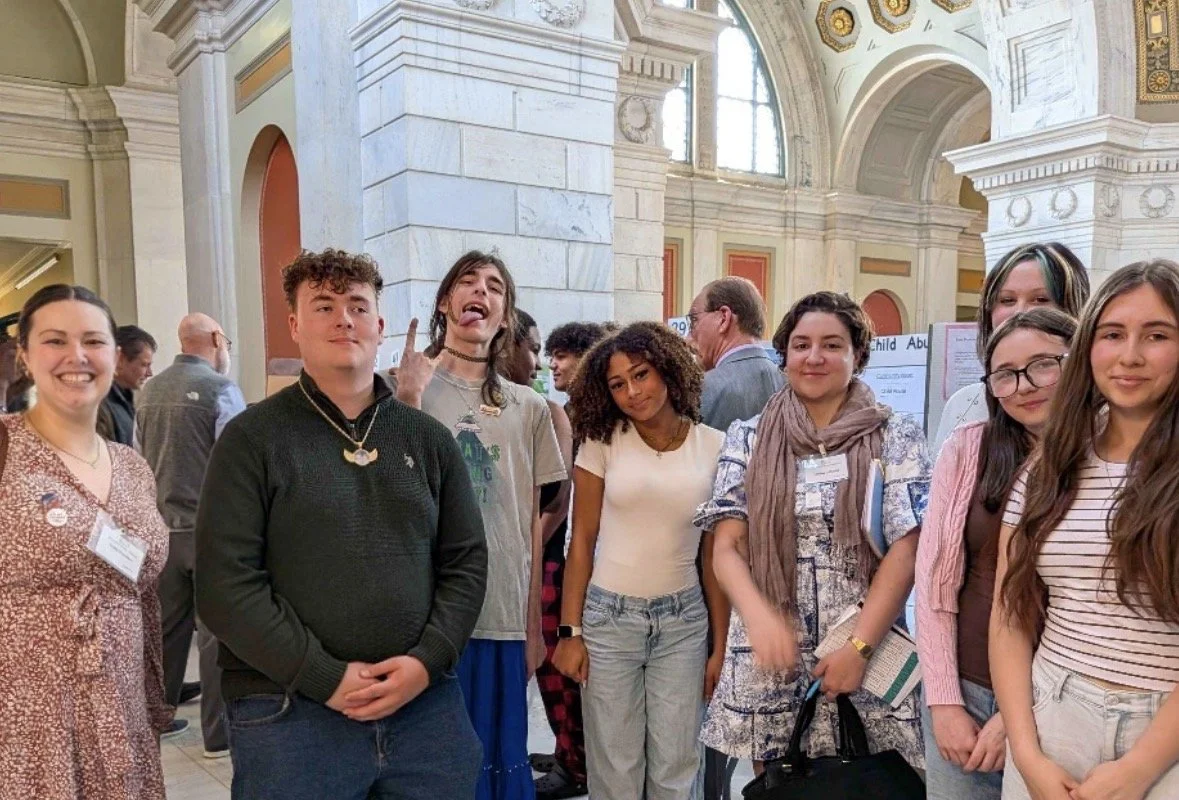
East Providence High School Students at RI Civics Day
Media consent was obtained for each pictured member
Of the 64 presentations, 39% focused specifically on mental health and emotional regulation. Every single presentation centered around safety, stability, or unmet basic needs. If that isn’t a clear message about what young people are asking for, I don’t know what is.
Meaningful change often starts locally – in schools, neighborhoods, libraries, and community spaces where people already interact every day.
Schools cannot be the sole mental health provider for children. As community members, using our voices to advocate – and exercising our right to vote – matters. Communities can support local volunteer programs, fund sensory rooms and calming corners in schools, advocate for mental health literacy education, strengthen peer support training for teens, and build stronger parent-teacher mental health coalitions.
As healthcare costs rise and navigating insurance becomes increasingly difficult, the need for accessible and affordable mental health care continues to grow. Community mental health and resources should be visible, accessible, and sustainable. This can include sliding-scale therapist directories such as Open Path Collective, local organizations like Thundermist Health Center, Providence Community Health Centers, and The Providence Center, mutual aid therapy funds, community wellness nights, free psychoeducation workshops and local support groups like those offered by NAMI RI, library partnerships, and transportation help for appointments.
Even small community efforts – like local libraries hosting free support groups or schools implementing calming corners – can meaningfully increase access and connection.
At the individual level, people can learn basic mental health first aid, check in on isolated neighbors or friends, normalize conversations around therapy, support local nonprofits, volunteer in youth programs, and attend school board and town meetings. Small actions may feel insignificant, but community trust and collective care are built gradually over time.
While buying and restructuring major systems may not be realistic solutions, the emotional response behind these conversations reveals something important: people are desperate for systems that prioritize human wellbeing over survival mode.
Maybe the lesson from this viral moment isn’t that we should crowd-fund airlines or healthcare systems. Maybe it’s the reminder that people are still longing for communities and systems that feel human.
Research consistently shows that hopelessness and disconnection worsen mental health outcomes, while community engagement and collective efficacy help people feel safer, more empowered, and more resilient. What might become possible if communities approached these problems with the same urgency and collective energy seen in viral moments online?